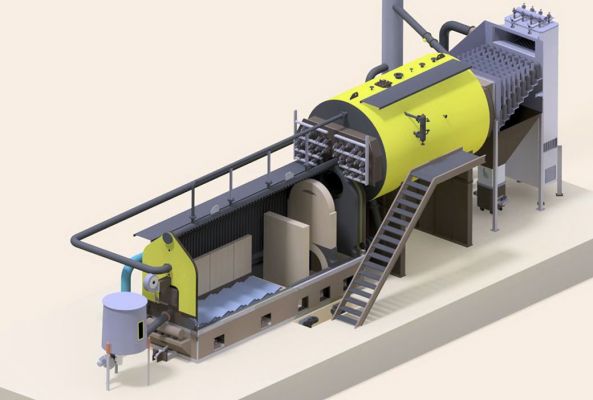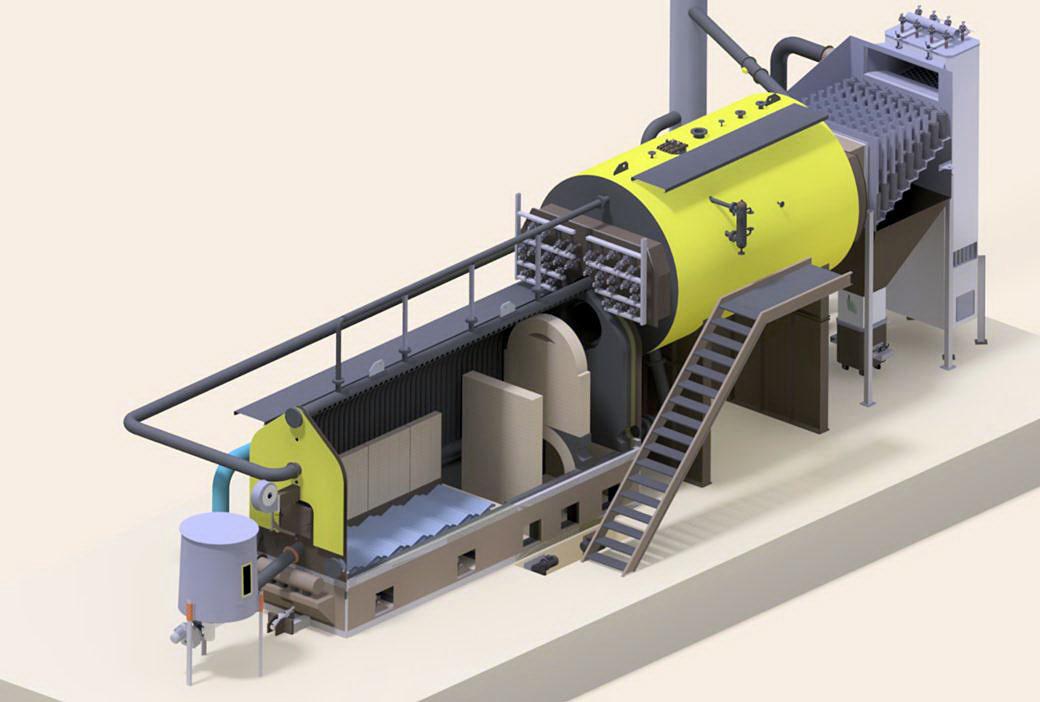
Large volume ABKessel combustion chamber, suitable for the combustion of solid fuels with heterogeneous size and variable water content
Chamber sized to maintain the combustion temperature of 850-950 ° C (excluding transient regimes).
The ABKessel combustion chamber is built with a mixed system for the construction of the walls:
- adiabatic walls in the first part to keep the biomass radiated, reducing the time required for the first phase.
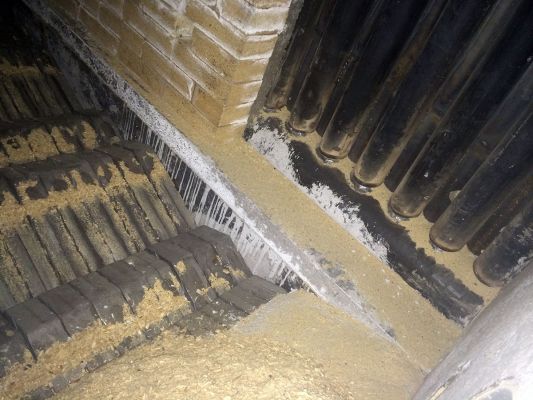
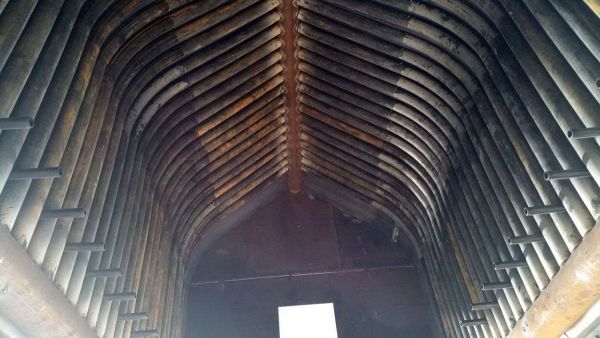
Vertical water pipe walls in the second part.
The passage of water in the pipes of the walls allows the absorption of any excess heat produced by combustion and is an integral part of the heat exchange system.
The advantages of the system are many:
- Very high thermal exchange efficiency. Fluid heating starts directly in the combustion chamber where the temperature reaches 950 ° C and therefore the ∆t between smoke and fluid is greater.
- Maintenance of the temperature inside the combustion chamber stable and for a long time, for the benefit of the CO, which ends its combustion; Receptive area for Denox insertion.
- Total absence of thermal stress on the refractories, during ignition and modulation of the thermal regime and during the change of wet to dry fuel.
Refractory lining:
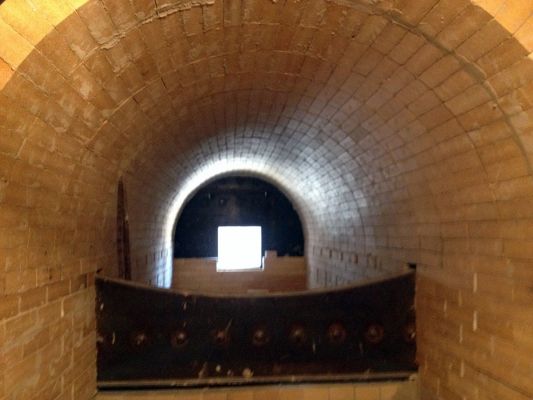
Refractory lining composed of ceramic bricks (Chamotte) with different chemical composition, based on temperature, smoke speed and risk of abrasion.
In areas of high temperature and high risk of abrasion bricks with high alumina content (60%) are installed, resistant to high temperatures (up to 1400 ° C), wear, thermal deformation, suitable for the combustion of fuels containing silica such as bark, fuels of herbaceous origin.
In areas subject to less thermal stress, bricks with lower alumina content (40%) are installed but with greater resistance to deformations due to normal non-permanent expansion of the walls.
The thickness and composition of the inner wall allow a large thermal inertia, necessary to maintain the temperature of the combustion chamber for a long time during transient thermal regimes.
Inside the combustion chamber is an arc made of ceramic refractory bricks that divides the drying, pyrolysis, combustion and gasification areas.
The self-supporting arch is made with beveled bricks that do NOT require cohesion material (cement) thanks to the contrast forces between bricks and bricks.
The height of the bricks changes according to the size of the combustion chamber.
The arc can be horizontal or inclined depending on the type of boiler and fuel.
At the back of the chamber a separating septum in refractory bricks is installed for the inversion of the gas flow and ash deposit in the discharge hopper
The combustion chambers are designed and built to complete combustion and minimize emissions and the production of unburned particles in the ash.